
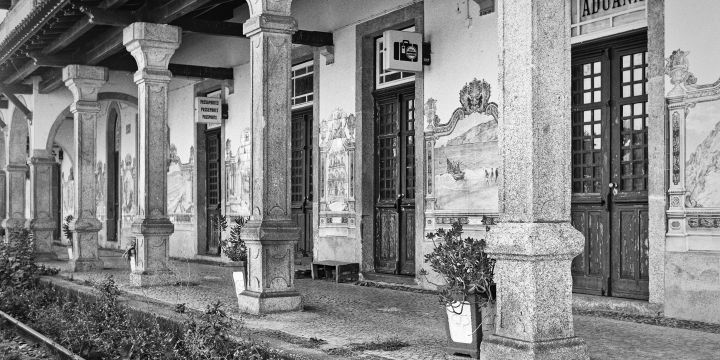
Beirã is a traditional rural village in the Alto Alentejo region of eastern Portugal, famous for its disused railway station. Located just a short distance from the Spanish border and the historic hilltop town of Marvão, this quiet village holds a fascinating past.
Introduction
At the start of my Great Road Trip in 2026, I stayed at the Campscape campsite near Beirã. Hearing about an old, disused railway station in the village, I decided to walk over early one morning to explore.
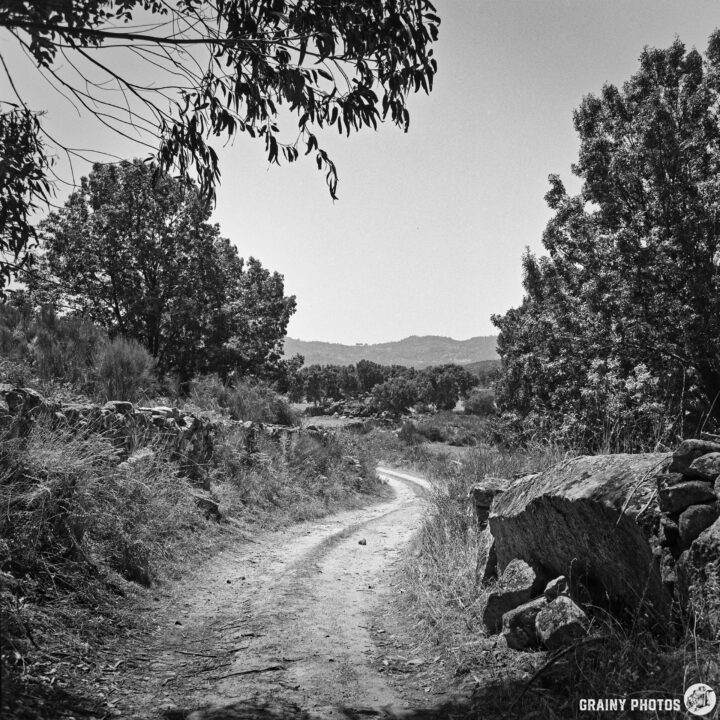
Camera: Mamiya C220, Lens: Sekor 65mm f3.5, Exposure: 1/125 sec, Aperture: f11, GPS location
While the former railway station is undoubtedly the main landmark, the entire village is a captivating destination for anyone who enjoys discovering forgotten infrastructure and places touched by time.
Film Photo Details
For this walk, I used the Mamiya C220 with a Sekor 65mm f3.5 lens. This has become one of my favourite medium-format cameras. It is relatively compact, not overly heavy and features interchangeable lenses; very rare for a twin-lens reflex (TLR) camera.
Film: Ilford FP4 (rated at box speed)
Development: Perceptol (1+1) for 15 minutes at 20°C
Digitisation: Nikon Zf with a Tokina AT-X Pro Macro 100mm lens
Processing: DXO PhotoLab 8
Film roll No. ID: 504
I took just one roll of film, so with the square format, I was limited to twelve photographs. I had to be selective and make every frame count!
Estação Ferroviária de Marvão–Beirã
Officially known as Estação Ferroviária de Marvão–Beirã, the station was once a vital stop on the international railway between Lisbon and Madrid. Inaugurated in 1881, it served as the last major Portuguese station before the Spanish border, playing an important customs and administrative role. The railway transformed Beirã from a quiet farming settlement into a bustling hub complete with shops, schools, and even a theatre.
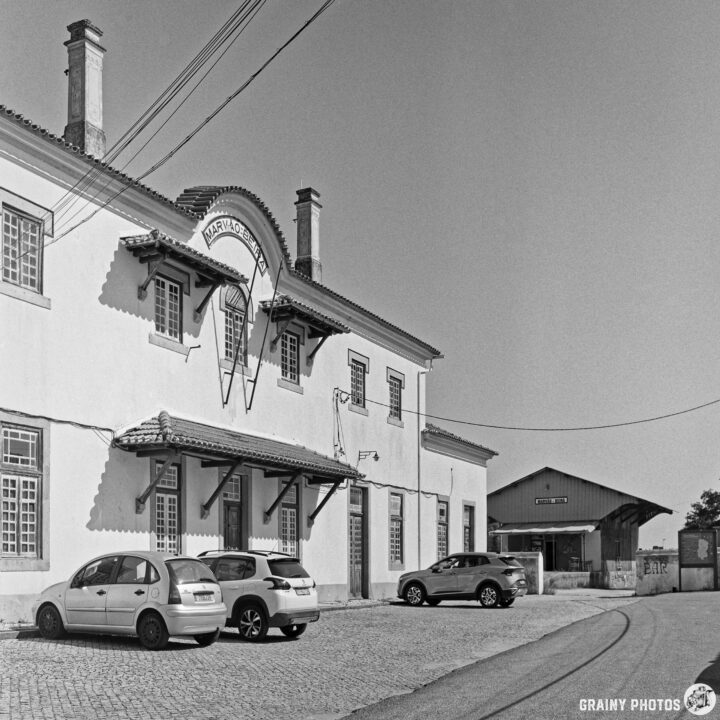
Camera: Mamiya C220, Lens: Sekor 65mm f3.5, Exposure: 1/250 sec, Aperture: f11, GPS location
The station is celebrated for its beautiful 1920s architecture by Raúl Lino, featuring stunning blue-and-white azulejo tile panels by Jorge Colaço that depict scenes from across Portugal.
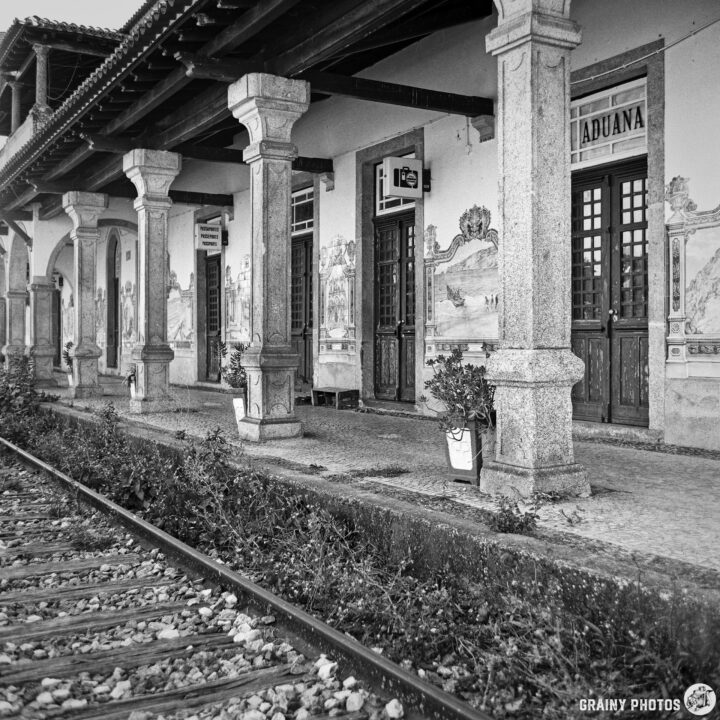
Camera: Mamiya C220, Lens: Sekor 65mm f3.5, Exposure: 1/60 sec, Aperture: f5.6, GPS location
Passenger services on the Ramal de Cáceres were withdrawn in 2011, and the international connection closed entirely in August 2012.
Beirã Station Today
Although the tracks are quiet, the station buildings have been given a second life. The old restaurant was renovated and reopened in 2013 as the Train Spot Guesthouse, allowing visitors to sleep inside a piece of railway history.
Next to the station, a disused railway shed now houses Rail Bike Marvão. Visitors can rent specially adapted, pedal-powered vehicles to travel along the tracks toward Castelo de Vide, enjoying attractive countryside views of Marvão and the surrounding hills.
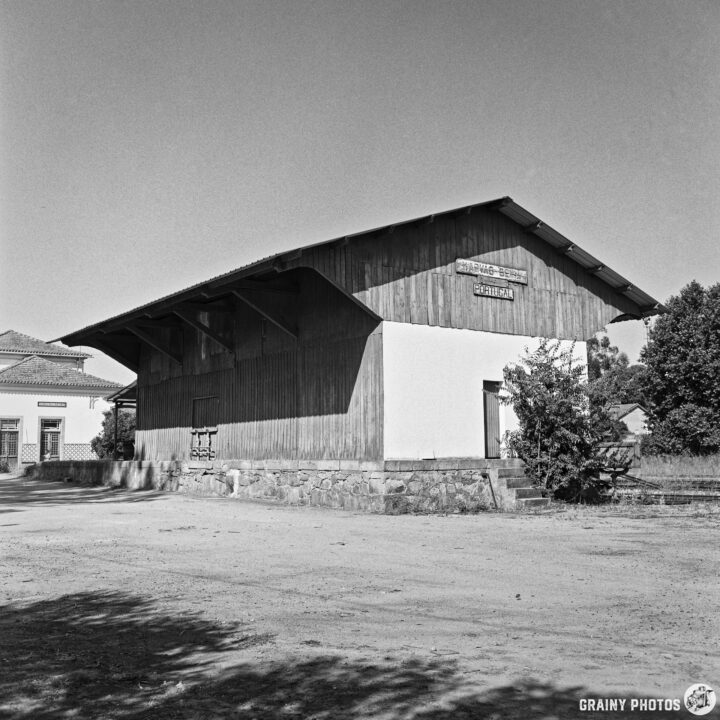
Camera: Mamiya C220, Lens: Sekor 65mm f3.5, Exposure: 1/250 sec, Aperture: f11, GPS location
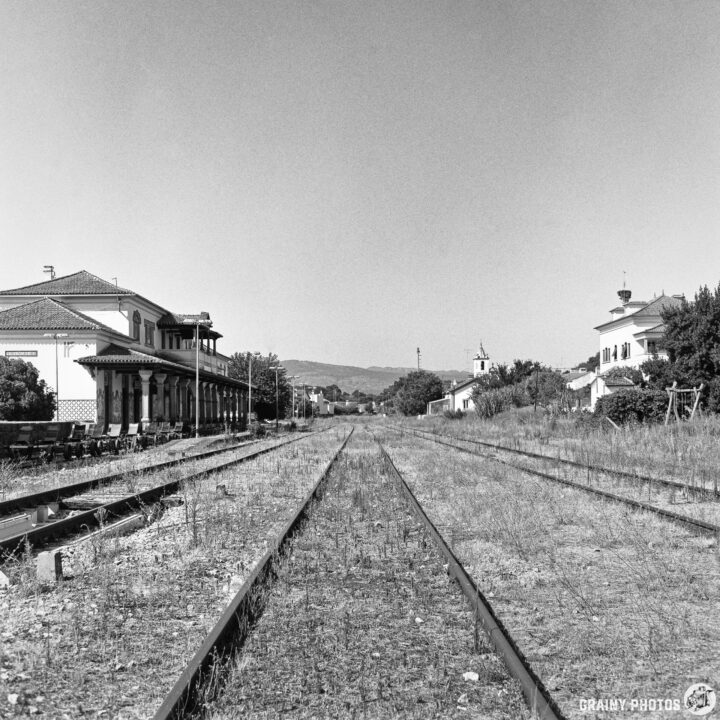
Camera: Mamiya C220, Lens: Sekor 65mm f3.5, Exposure: 1/125 sec, Aperture: f11, GPS location
The Village
In its prime, Beirã was a lively border village. Today, the theatre and shops are largely gone, and Beirã has returned to its quiet roots. It is now a peaceful, primarily residential community focused on rural tourism and heritage.
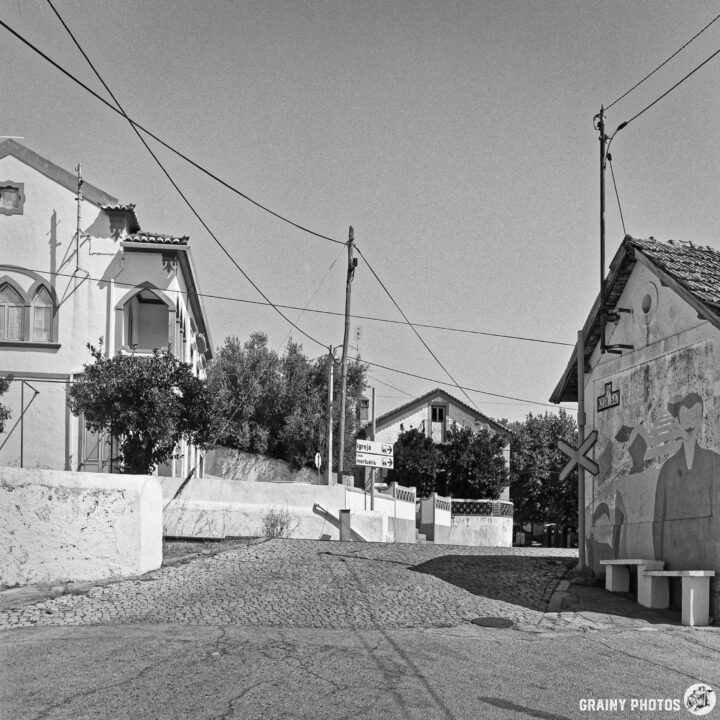
Camera: Mamiya C220, Lens: Sekor 65mm f3.5, Exposure: 1/250 sec, Aperture: f11, GPS location
Wandering through the village, I found a striking mix of pretty, well-cared-for residential lanes with whitewashed houses and cottages. There were also much grander buildings from its bygone heyday, many of which now stand empty and are slowly falling into disrepair.
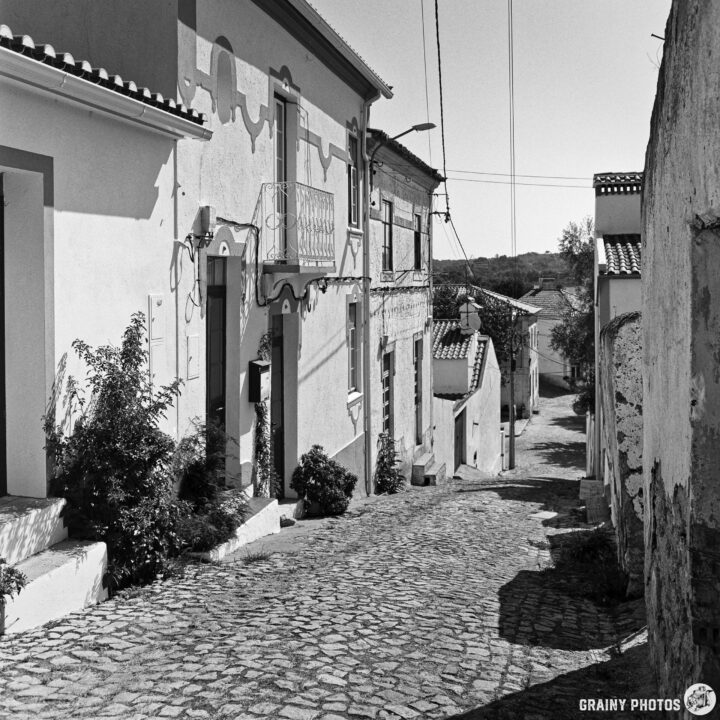
Camera: Mamiya C220, Lens: Sekor 65mm f3.5, Exposure: 1/250 sec, Aperture: f11, GPS location
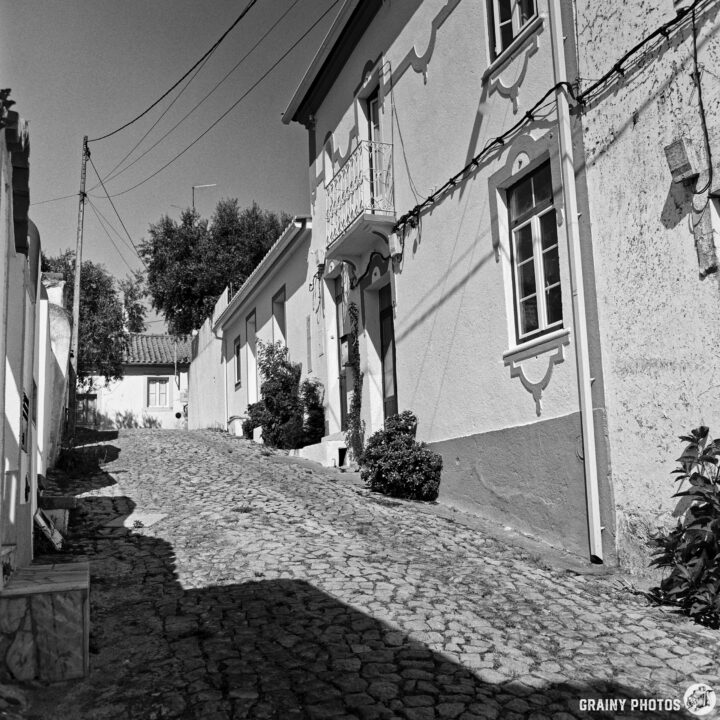
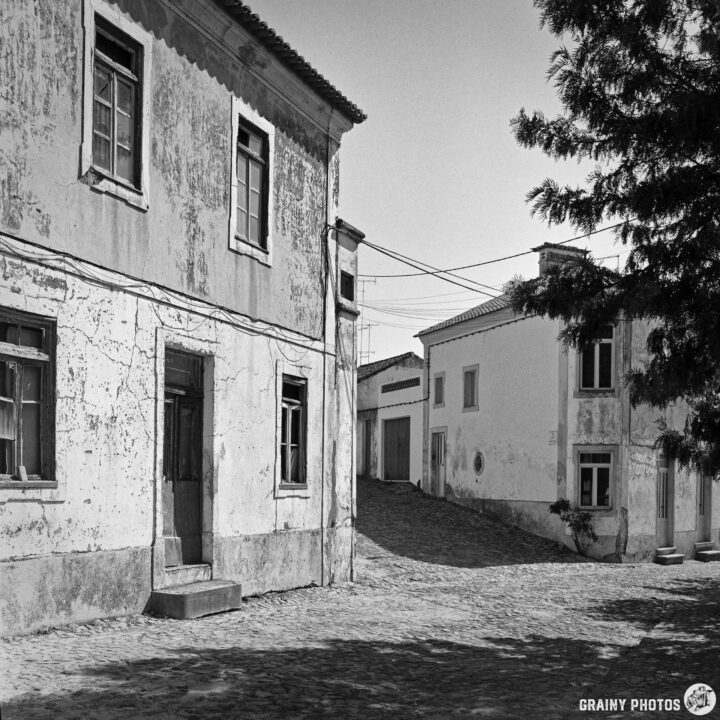
Camera: Mamiya C220, Lens: Sekor 65mm f3.5, Exposure: 1/250 sec, Aperture: f11, GPS location
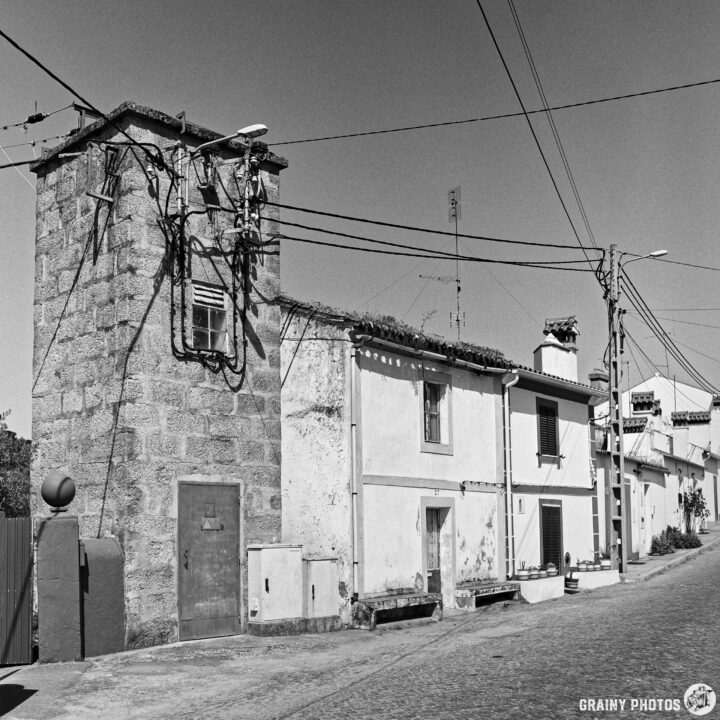
Camera: Mamiya C220, Lens: Sekor 65mm f3.5, Exposure: 1/250 sec, Aperture: f16, GPS location
Choça – Traditional Huts
Dotted around the area are several simple traditional thatched-roofed rural huts, known as choça. While “choça” is the widely recognised term, they are also referred to locally as chafurdão or choupana. Just a few kilometres away in Spain, they are known as chozo.
These simple structures, featuring stone walls and thatched roofs, were mostly used by agricultural workers and shepherds. They make fantastic photo subjects. There are several in the area; I came across this one on my walk to Beirã. Goats were using it to shelter from the hot sun.
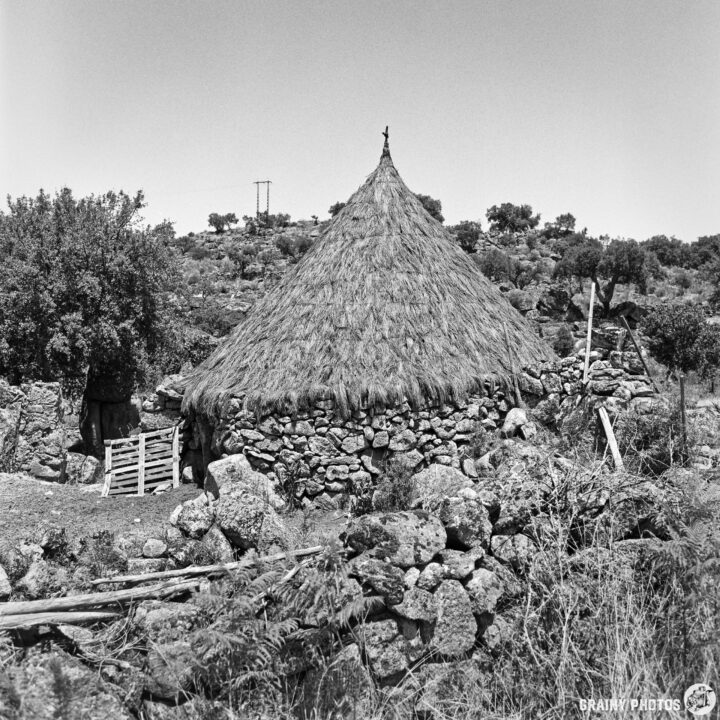
Camera: Mamiya C220, Lens: Sekor 65mm f3.5, Exposure: 1/125 sec, Aperture: f11, GPS location
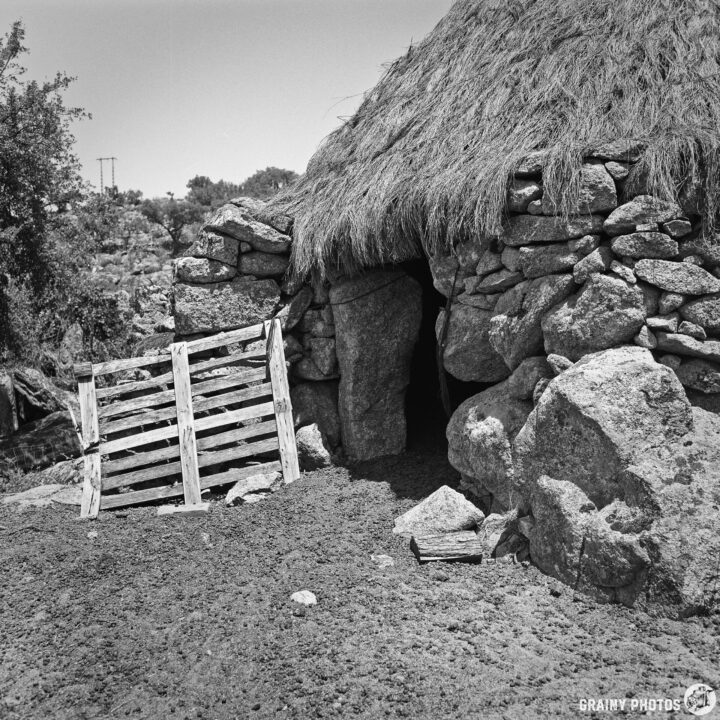
Camera: Mamiya C220, Lens: Sekor 65mm f3.5, Exposure: 1/125 sec, Aperture: f11, GPS location
Conclusion
Beirã is a fascinating village with a rich history. Whether you are exploring the disused railway station or the quiet village lanes, it is well worth a visit—especially for photographers, who will find a wealth of subjects around every corner.