
Join me on a photo walk through Castelo de Vide, Portugal, with a vintage Olympus XA film camera. We’ll explore historic narrow streets, the Jewish Quarter, and the castle, journeying through Portugal’s medieval past. All illustrated with black-and-white photos. Let’s explore!
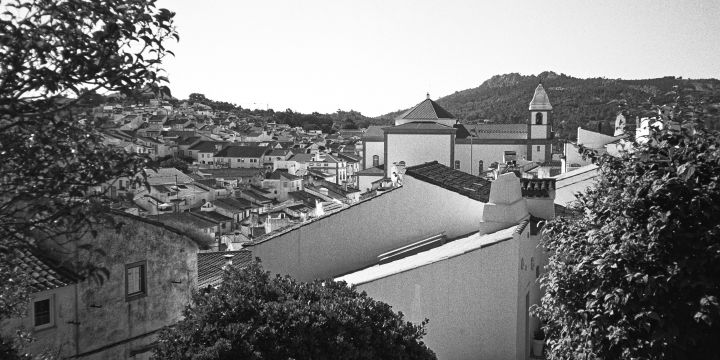
Nestled in the rolling hills of the Alto Alentejo region in eastern Portugal, close to the Spanish border, Castelo de Vide is one of the country’s most enchanting historic towns. Its whitewashed houses, narrow cobbled streets, flower-filled balconies and medieval architecture create an atmosphere of quiet charm. The town is particularly beautiful when viewed from a distance, with its castle rising proudly above the cluster of white houses.
Exposure: 1/125 sec, Aperture: f11, GPS location
Photography in Castelo de Vide
For photography lovers, Castelo de Vide is an absolute delight. The contrast of whitewashed walls against blue skies, the texture of ancient granite, colourful flowers spilling from balconies and the ever-changing light across the surrounding hills provide endless opportunities for beautiful images.
I was there in August, and due to the heat (in excess of 40 C), I chose to go in the early morning; however, whether exploring its medieval streets in the morning sunshine or watching the rooftops glow in the late-afternoon light, Castelo de Vide is one of those special Portuguese towns that leaves a lasting impression and makes you want to return.
Film Photo Details
For this photo walk, I used the compact Olympus XA, a brilliant little 35mm point-and-shoot manual focus camera. It features an impressive f/2.8 F.Zuiko lens, utilising a clever “reverse retrofocus” design that keeps the camera incredibly slim without sacrificing sharpness. While its diminutive size can make it a bit fiddly to handle, and the electronic shutter release takes some getting used to, its pocketable design and reliable auto-exposure make it a truly capable travel companion.
Film: Ilford FP4 (rated at box speed)
Development: Perceptol (1+1) for 15 minutes at 20°C
Digitisation: Nikon Zf with a Tokina AT-X Pro Macro 100mm lens
Processing: DXO PhotoLab 8
Film roll No. ID: 505.
The Historic Centre
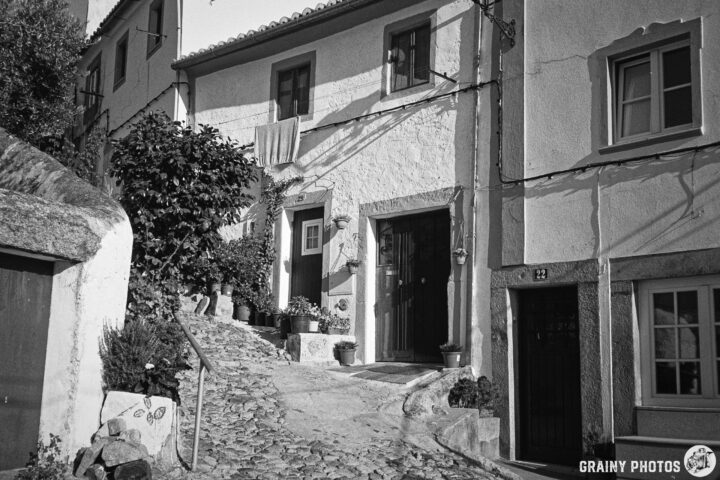
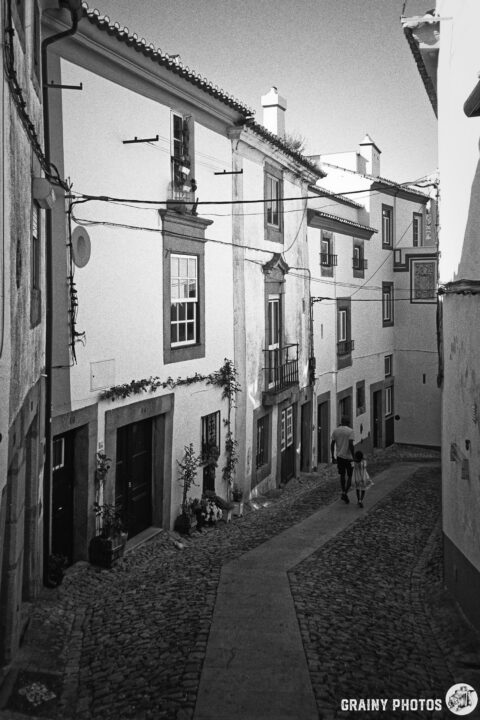
One of the greatest pleasures here is simply wandering. The streets wind up and down the hillside in a maze of passages and stone stairways and traditional houses. Many buildings retain their original architectural details, including Gothic doorways, granite window frames and decorative wrought-iron balconies. Brightly coloured flowers add splashes of colour to the otherwise white façades, while the occasional glimpse of a distant hillside or church tower provides a picture-perfect moment. There’s no need for a planned route—getting pleasantly lost is all part of the experience.
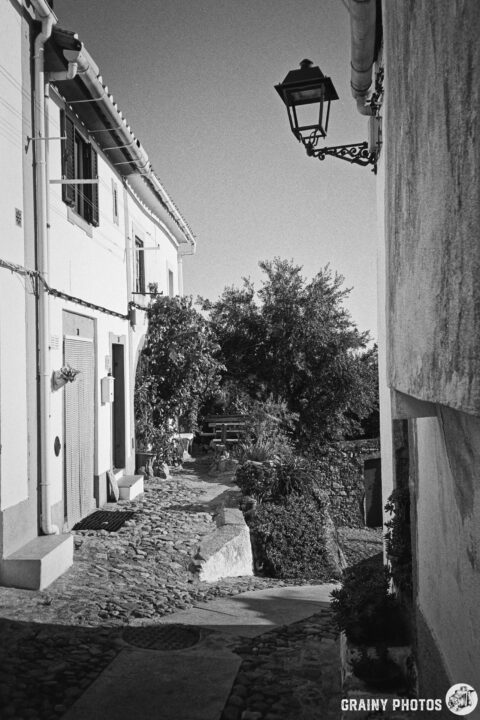
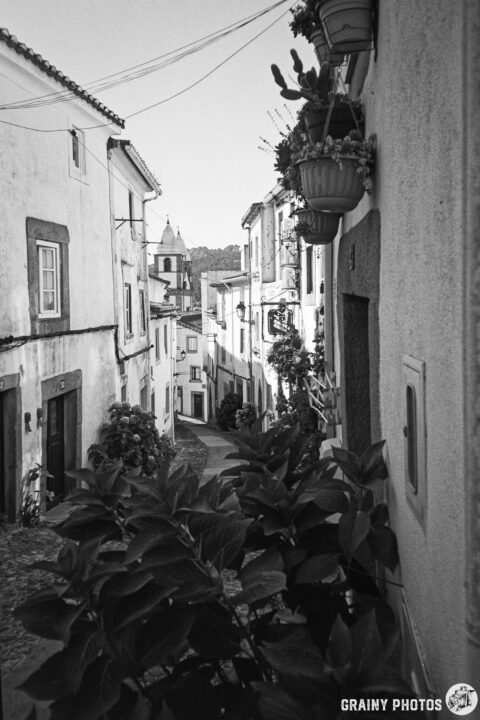
Exposure: 1/125 sec, Aperture: f8, GPS location
Igreja de Santa Maria da Devesa
The town’s main parish church, the Igreja de Santa Maria da Devesa, is one of Castelo de Vide’s most striking landmarks. Built between 1789 and 1873 over a 14th-century chapel, this beautiful church is well-known for its twin bell towers and its granite, Baroque-influenced façade. It is a prominent and commanding presence in the historic centre.
I visited on market day, so the church was surrounded by stalls and burger vans—not quite the peaceful look I was hoping for, but I still managed to snap these two photos away from the hustle and bustle:
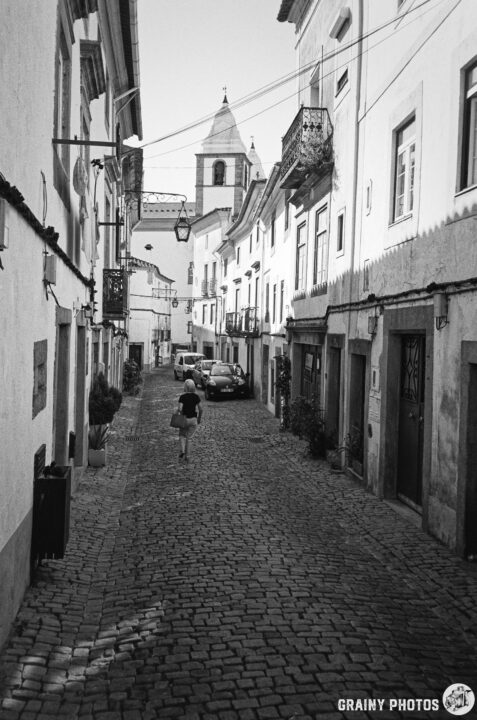
Exposure: 1/125 sec, Aperture: f8, GPS location
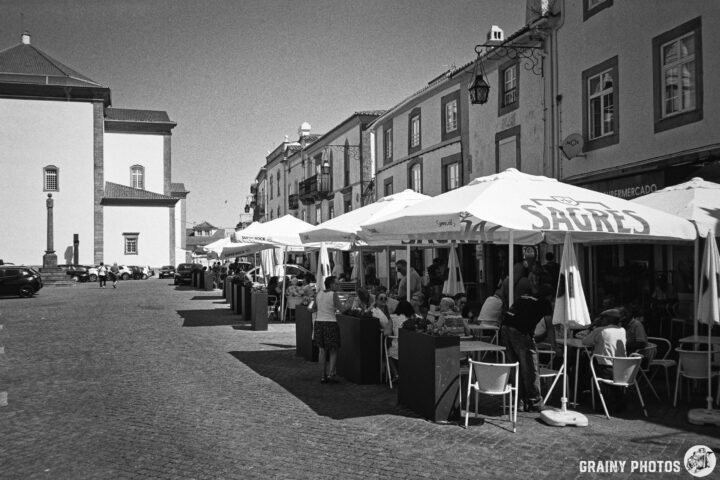
Exposure: 1/125 sec, Aperture: f11, GPS location
The Jewish Quarter
The Judiaria is perhaps the most historically significant part of town. This beautifully preserved neighbourhood offers a glimpse into Portugal’s Jewish history, especially following the influx of refugees from Spain in 1492. At its heart stands the Medieval Synagogue, now a modest museum dedicated to the community’s heritage
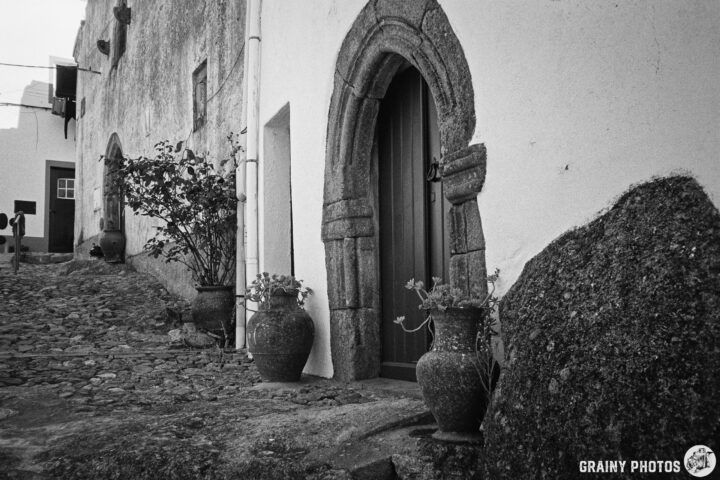
Exposure: 1/60 sec, Aperture: f8, GPS location
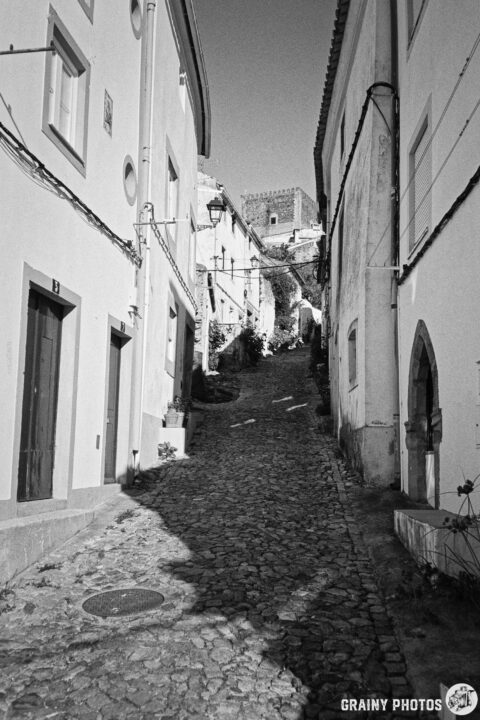
Exposure: 1/125 sec, Aperture: f11, GPS location
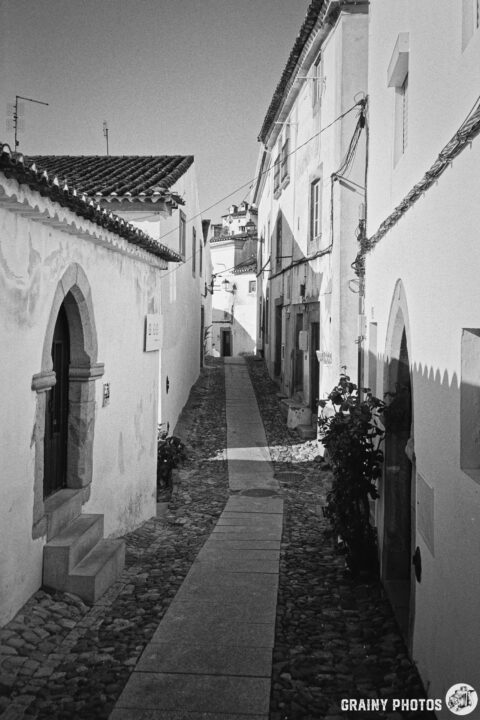
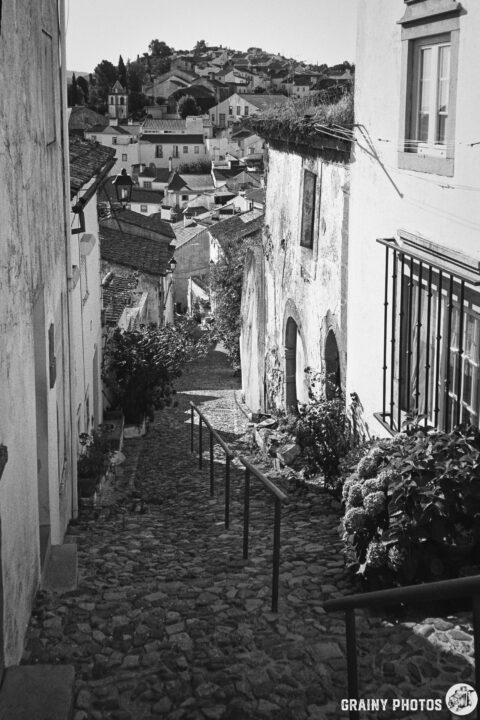
The Castle and Medieval Quarter
At the top of the town stands the Castle of Castelo de Vide, a fortress dating back to the reign of King Dinis. The views from the walls are spectacular, stretching across the Alentejo landscape. Unfortunately, the castle was under renovation during my visit and was mostly covered in scaffolding. I didn’t take any photos of the castle, except this one:
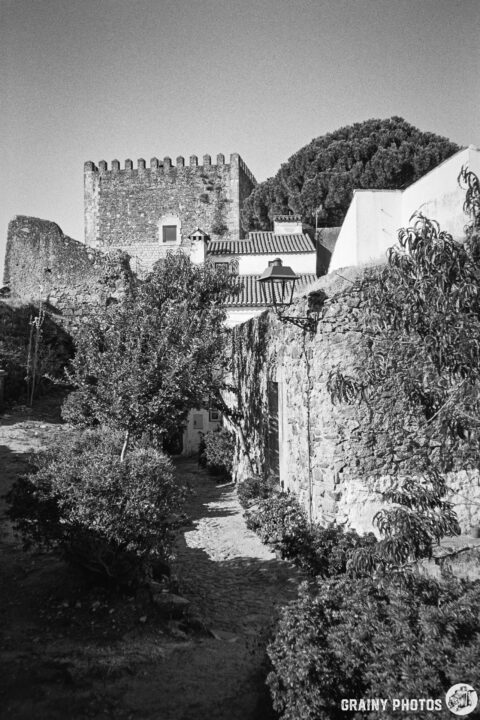
The medieval quarter surrounding the castle (Bairro do Castelo) retains a compact, ancient character, featuring narrow cobbled streets and whitewashed houses, the Igreja de Nossa Senhora da Alegria and the old prison (Antiga Cadeia).
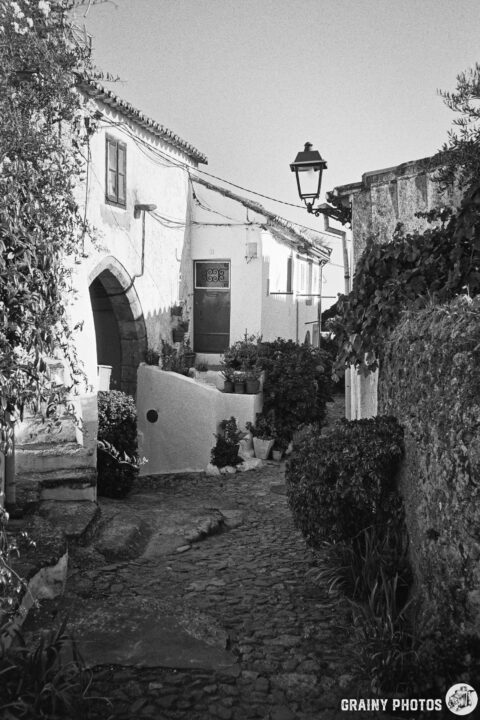
Exposure: 1/125 sec, Aperture: f8, GPS location
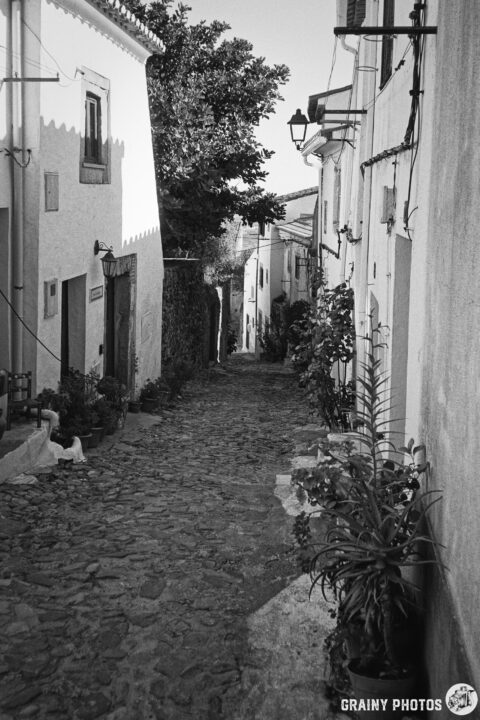
Exposure: 1/125 sec, Aperture: f8, GPS location
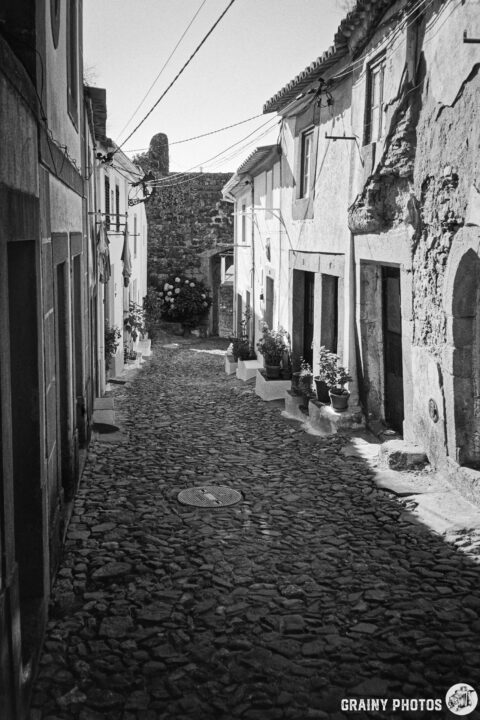
Exposure: 1/125 sec, Aperture: f11, GPS location
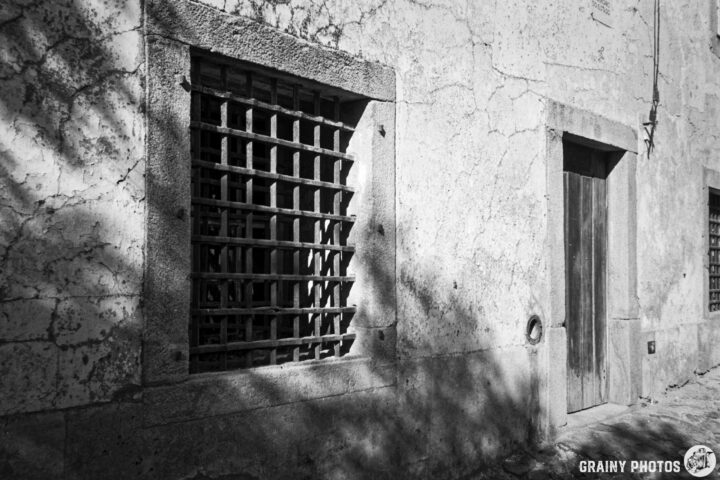
Exposure: 1/30 sec, Aperture: f11, GPS location
An especially evocative detail associated with the old prison is the story that some prisoners would gather behind the barred windows of their cells to look towards the nearby Nossa Senhora da Alegria Church during Mass and pray for forgiveness.
… from a local information board.
The Surrounding Area
If you venture just beyond the historic streets, you’ll find that Castelo de Vide is surrounded by some of the most breathtaking countryside in the Alto Alentejo. The town is nestled right within the Serra de São Mamede Natural Park—a gorgeous landscape of rolling hills, cork oak forests, and traditional olive groves. It’s a surprisingly lush, mountainous corner of the Alentejo that feels worlds away from the flatter, drier plains you usually see in the south.
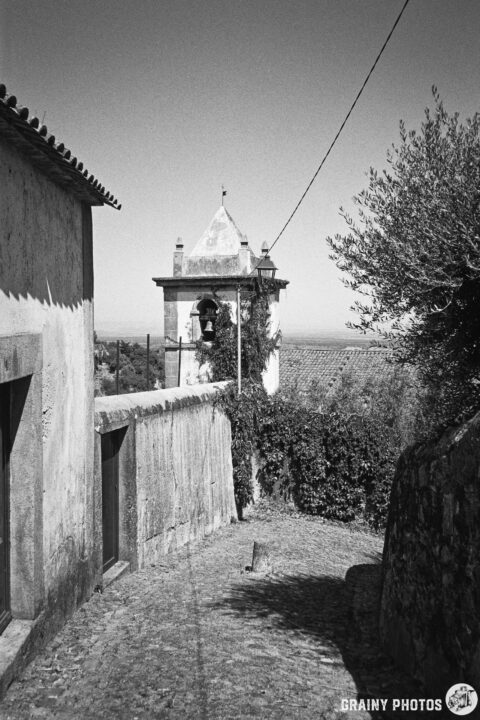
Exposure: 1/125 sec, Aperture: f11, GPS location
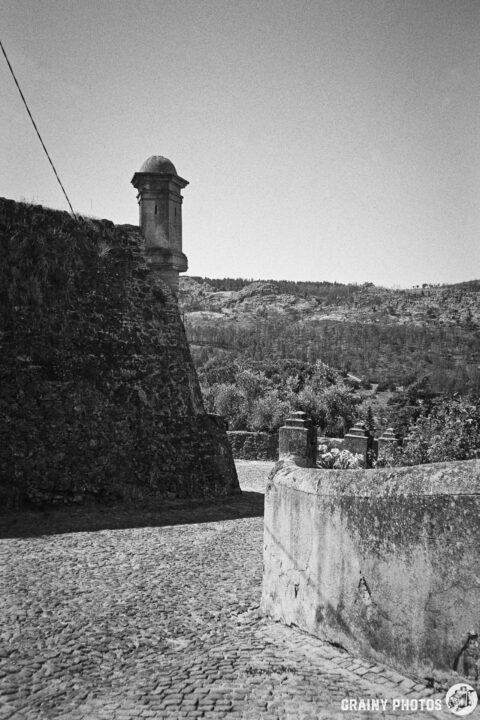
Exposure: 1/125 sec, Aperture: f8, GPS location
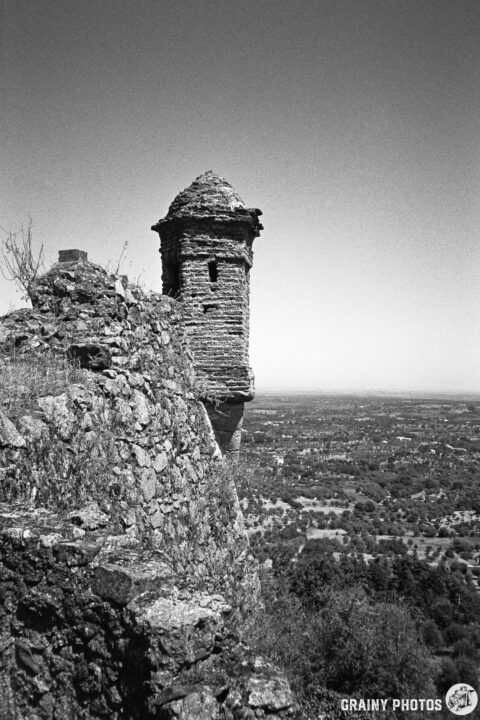
The area is perfect for walking, discovering quiet rural villages, or just soaking in the peace and quiet. And if you have the time, the nearby medieval town of Marvão is perched dramatically on its own hilltop and makes for an unforgettable day trip.
Conclusion
Castelo de Vide is one of those special places that truly rewards a slower pace. Its real magic isn’t just in the castle or the monuments, but in the wonderful atmosphere woven through its history, architecture, and daily life. Whether you’re looking out from the medieval fortress, wandering the quiet lanes of the Jewish quarter, or admiring the old fountains and flower-filled streets, every corner here has its own story to share.