
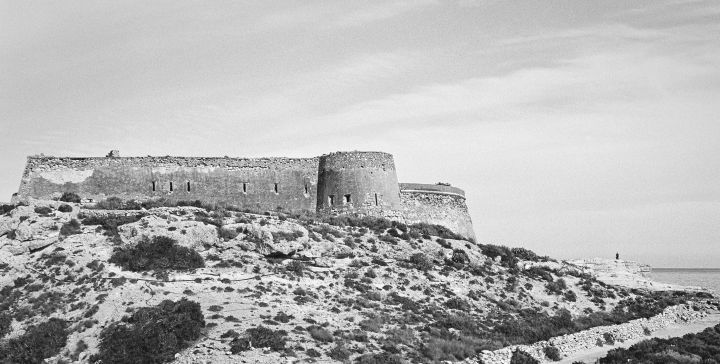
Castillo de San Ramón, now a picturesque ruin, stands on the edge of the Rodalquilar valley in Cabo de Gata Natural Park. Built in the 18th century during Charles III’s reign, it was part of a coastal defence system to protect southeastern Spain from pirates and foreign invaders.
Location
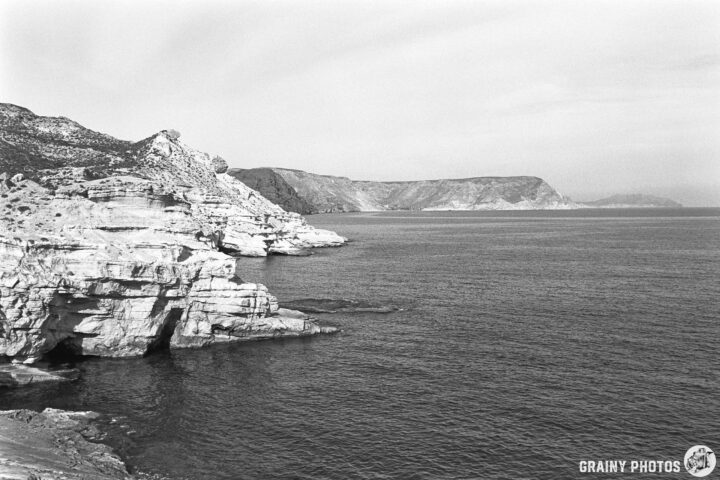
Perched strategically on the shoreline in the Cabo de Gata–Níjar Natural Park, Almería, Spain, the castle commands expansive views of the bay and volcanic landscape. It is only a stone’s throw from the Abandoned Rodalquilar Gold Mines.
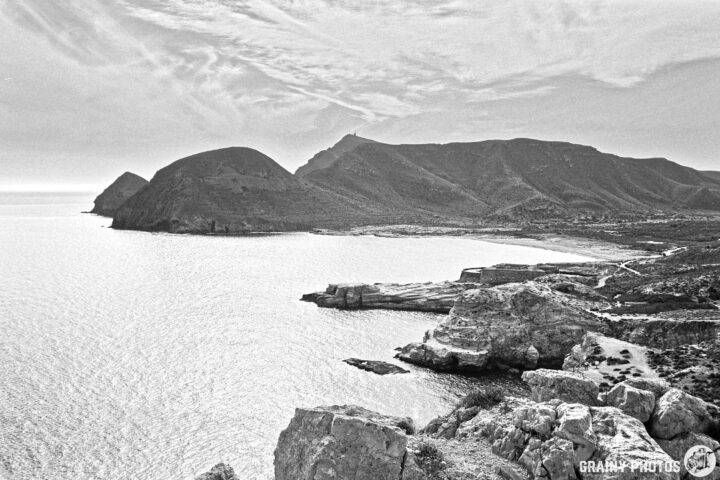
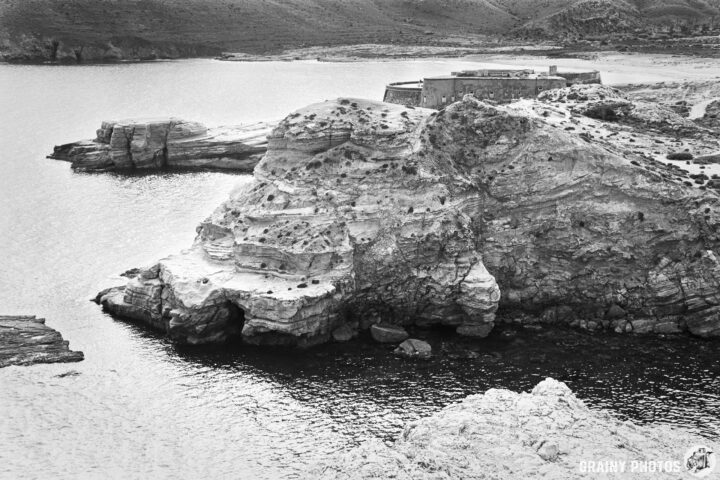
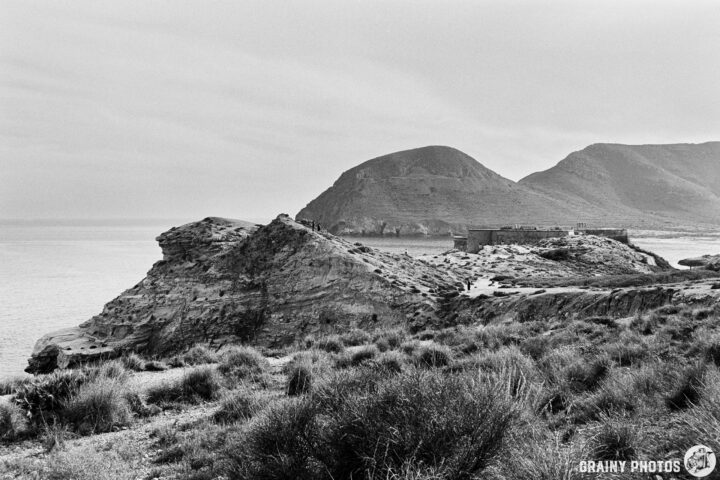
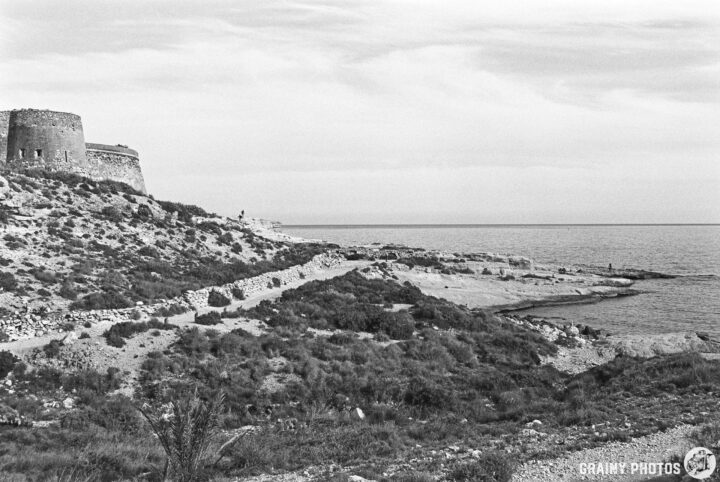
Camera: Nikon F3, Lens: Nikkor f3.5 35-105mm zoom, Exposure: 1/250 sec, Aperture: f11, GPS location
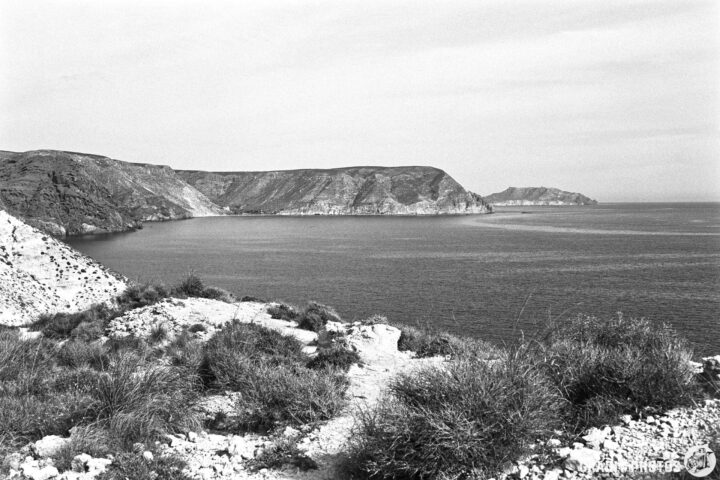
Camera: F3, Lens: Nikkor f3.5 35-105mm zoom, Exposure: 1/250 sec, Aperture: f11, GPS location
The Construction of Castillo de San Ramón
Its compact design, built from local stone, featured thick walls, bastions and gun emplacements. Thick stone walls and barrel-vaulted ceilings offered protection against artillery fire and coastal conditions. While never the centre of major battles, it played a crucial role in regional security and represented the Spanish Crown’s control over remote coastal territories.
Access to the interior was controlled through a fortified entrance, likely protected by outer defensive elements such as an earthwork or ditch.
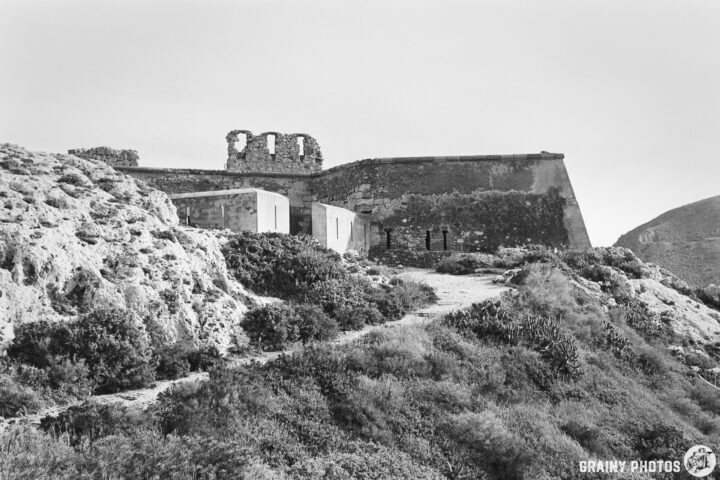
Camera: Nikon F3, Lens: Nikkor f3.5 35-105mm zoom, Exposure: 1/125 sec, Aperture: f8, GPS location
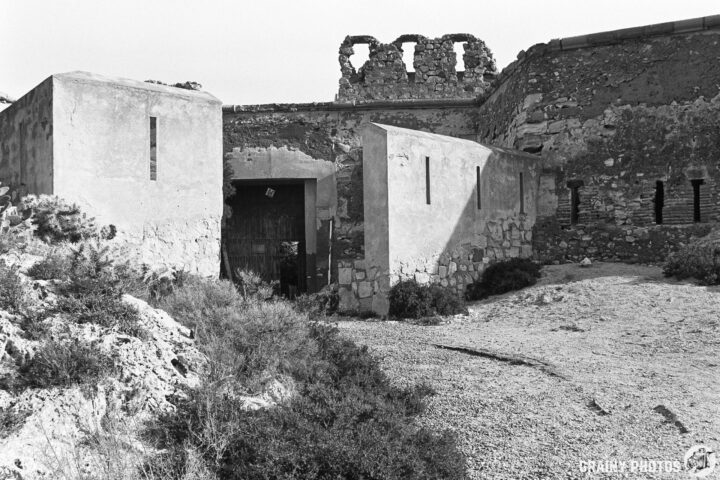
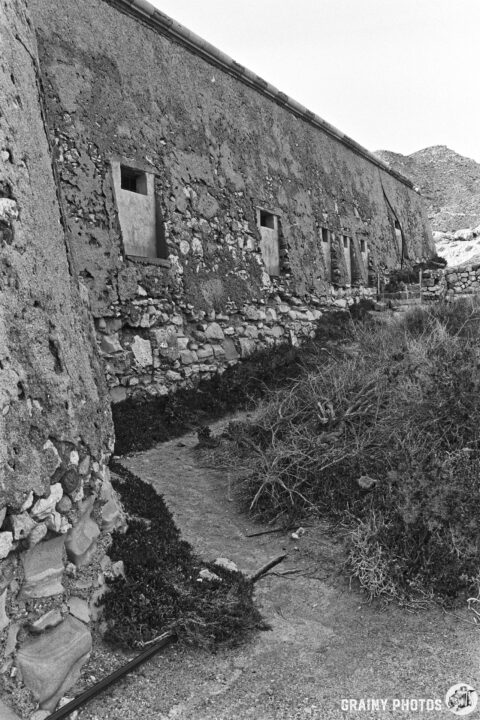
Camera: F3, Lens: Nikkor f3.5 35-105mm zoom, Exposure: 1/60 sec, Aperture: f8, GPS location
Internal Layout
The Castillo de San Ramón, designed as an 18th-century coastal battery rather than a traditional castle, reflects its purely defensive purpose. Its layout centred on a rectangular courtyard (patio de armas) from which vaulted rooms served as quarters, storage and magazines for weapons and supplies.
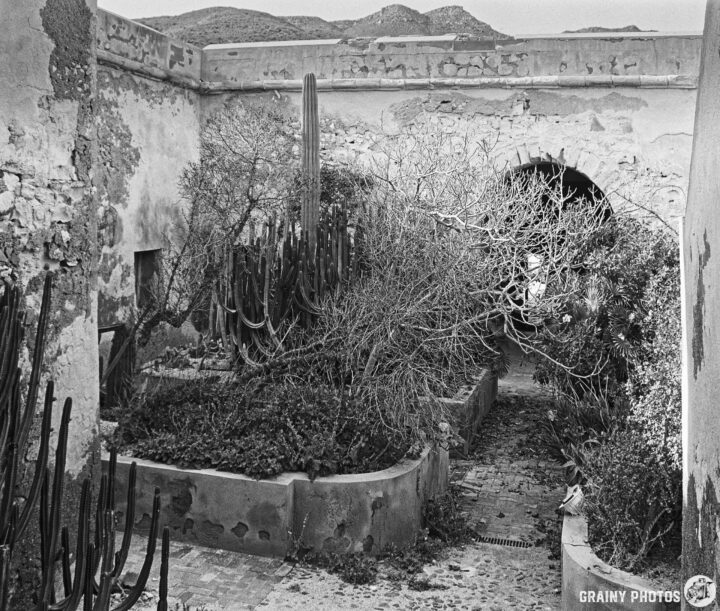
Camera: Nikon F3, Lens: Nikkor f3.5 35-105mm zoom, Exposure: 1/60 sec, Aperture: f5.6, GPS location
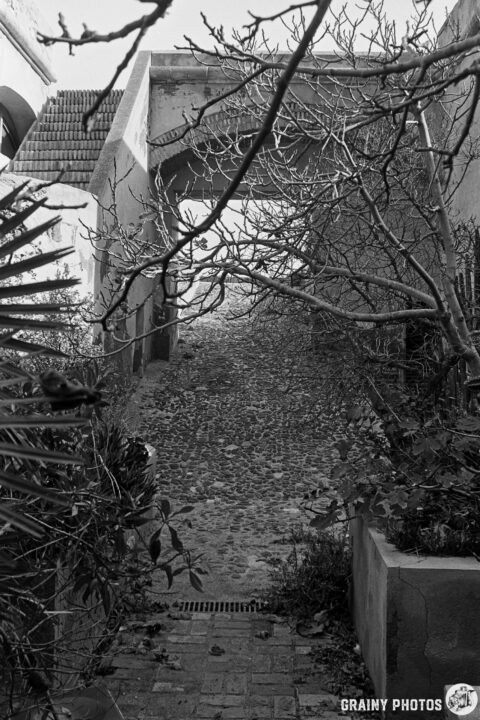
Camera: Nikon F3, Lens: Nikkor f3.5 35-105mm zoom, Exposure: 1/125 sec, Aperture: f5.6, GPS location
Facing the sea, the fortress boasted a semi-circular artillery platform with cannon emplacements strategically placed to control nearby coves and maritime approaches. Above, a parapeted terrace with firing slits provided infantry defence, completing a compact yet efficient design that balanced firepower, surveillance and the practical needs of a small garrison guarding this remote coastline.
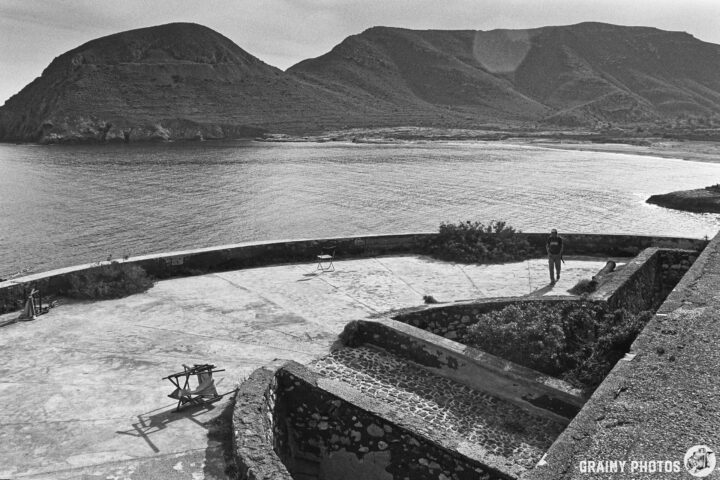
Camera: Nikon F3, Lens: Nikkor f3.5 35-105mm zoom, Exposure: 1/250 sec, Aperture: f11, GPS location
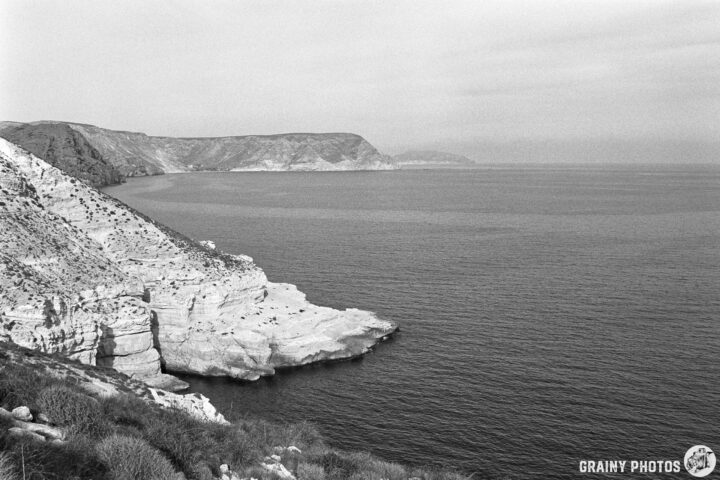
Camera: Nikon F3, Lens: Nikkor f3.5 35-105mm zoom, Exposure: 1/125 sec, Aperture: f11, GPS location
Changing military needs and declining coastal threats led to its abandonment, and exposure to the elements reduced it to ruins.
Castillo de San Ramón Today
Today, the Castillo de San Ramón is valued as a cultural and scenic landmark. Its remains blend with the arid hills and dramatic coastline of Rodalquilar, making it a compelling stop for history enthusiasts, photographers, and nature lovers. It offers a quiet reminder of the region’s defensive past and its enduring relationship with the Mediterranean Sea.
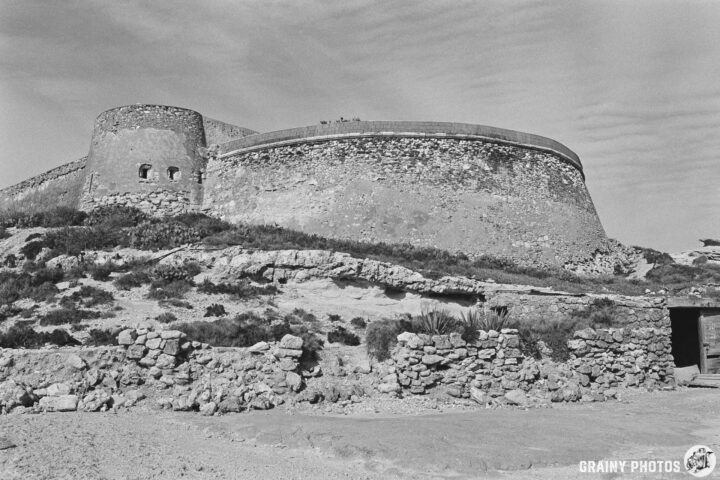
Camera: Nikon F3, Lens: Nikkor f3.5 35-105mm zoom, Exposure: 1/250 sec, Aperture: f11, GPS location
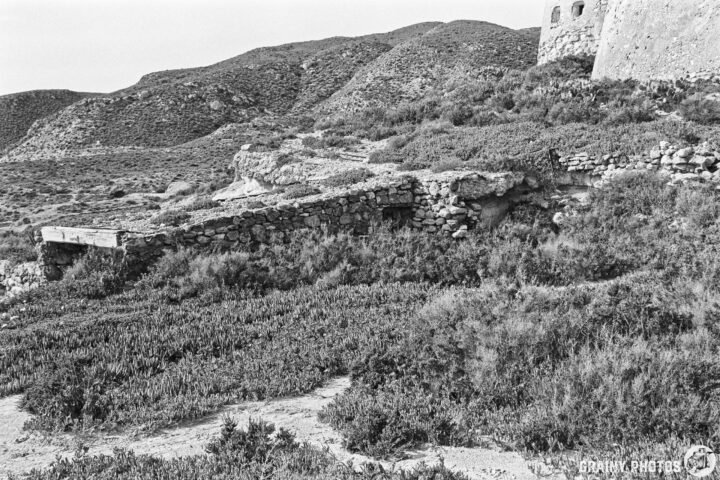
Camera: Nikon F3, Lens: Nikkor f3.5 35-105mm zoom, Exposure: 1/125 sec, Aperture: f11, GPS location
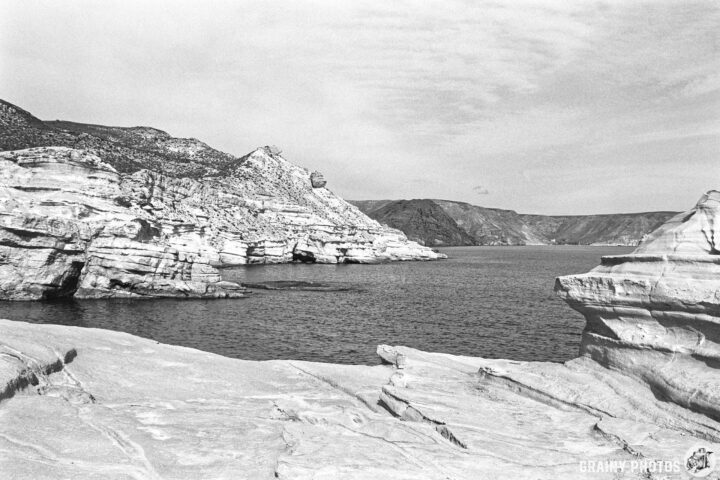
Camera: F3, Lens: Nikkor f3.5 35-105mm zoom, Exposure: 1/250 sec, Aperture: f11, GPS location
Currently, there are no confirmed plans to convert Castillo de San Ramón into a hotel or commercial enterprise. While there has been interest in repurposing the castle, including potential adaptive reuse as a private residence or boutique hotel, no official development plans exist.
Film Photo Details
I used a Nikon F3 film camera, loaded with Ilford Delta 100 (six photos) and Kentmere 100 film (remaining photos). Details of the camera, lens and settings are given under each photo.
I developed the films in Spur Acurol-N, 1+70, for 9 minutes @20C.
The photos were digitised using a Nikon Zf mirrorless digital camera with a Tokina AT-X Pro Macro 100mm f2.8 D lens and processed using DXO Photolab 8 software.
Film roll No. 474 and 475.